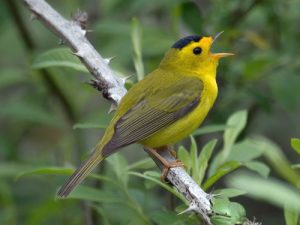
At Masonville Cove, a bird banding program is helping researchers better understand migration along the Chesapeake Bay, while also revealing something exciting: the return of birds first banded in 2023.
Since the program began, more than 3,000 birds representing about 90 species have been banded through a partnership led by the Maryland Port Administration (MPA), MES, U.S. Fish and Wildlife Service (USFWS), and the nonprofit Birds of Urban Baltimore (BUrB).
BUrB holds the permits from the U.S. Geological Survey and the Maryland Department of Natural Resources (DNR) authorizing the banding work, with volunteers supporting the banding effort through fieldwork and data collection.
Bird banding is a hands-on process in which birds are safely captured, fitted with a small, metal leg band, and measured before being released. Researchers record details like size, weight, age, and sex, which help build a long-term picture of migration routes, survival, and behavior.
Fall 2025 marked the third season of migration banding at Masonville Cove. The team banded 838 birds of 56 species between early August and early November, with a brief late-season session in December. On September 27, the station set a single-day record with 107 new birds banded and three recaptures processed.
Throughout the full year, the team banded 1,341 birds of 72 species. More than 210 members of the public also visited the station, and the volunteer team grew by six new members, the largest increase in a single season so far.
According to MES Environmental Specialist Cal Liddell, seeing birds return has been especially rewarding. “This year we’ve started catching a lot of birds that we originally banded in 2023, such as Carolina chickadee and a northern rough-winged swallow”. These recaptures indicate that Masonville is an important stop along the Atlantic Flyway, where birds reliably return to rest, feed, or breed.
source: Maryland Port Administration ECOPort Newsletter
Leave a Reply
You must be logged in to post a comment.