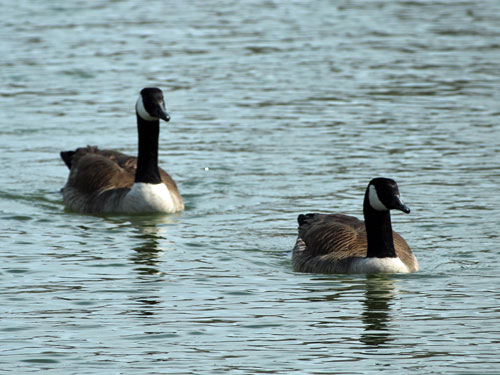
Christmas 2025 bird counts at Dredged Material Management Program (DMMP) sites near Baltimore documented an array of birds.
Following a successful pilot last year, 2025 marked the first official year of the Baltimore City Christmas Bird Count (CBC) with three count circles: Loch Raven, Middle River, and Baltimore City.
Two of these circles include MPA Dredged Material Management Program (DMMP) sites. Hart-Miller Island Dredged Material Placement Site (HMI) falls within the Middle River circle, while the Baltimore City circle includes Cox Creek Dredged Material Containment Facility (DMCF) and Swan Creek Wetlands, Masonville DMCF, Masonville Cove, and Hawkins Point DMCF.
The official Middle River count took place on December 14, 2025; however, high winds that day prevented access to HMI. As a result, Carney conducted a follow-up survey on Dec. 16, which added 13 count-week species, including notable rarities such as rough-legged hawk, short-eared owl, and tree swallow.
More favorable weather on Dec. 20, 2025, allowed teams to survey all three DMMP Sites in the Baltimore City circle.
Highlights included:
Cox Creek DMCF and Swan Creek Wetlands:
2,500 ruddy ducks, one Virginia rail, two American kestrels, three common ravens, 15 American pipits, and three purple finches
Masonville DMCF and Masonville Cove:
one common goldeneye, one red-breasted merganser, one common loon, and one eastern phoebe
Hawkins Point DMCF:
one American kestrel, one common raven, one orange-crowned warbler, and one blue-headed vireo, one of the two rarest birds recorded during the entire count
The other rarest bird documented in the Baltimore City circle was at Fort McHenry National Monument and Historic Shrine, where a brant was observed. According to the Chesapeake Bay Program, brant are waterfowl that breed in the high Arctic and migrate south to the Chesapeake region each winter.
Christmas Bird Counts
Counts are conducted within fixed circles measuring 15 miles in diameter, allowing results to be compared consistently from year to year. Birders work in teams to survey assigned sectors within each circle, documenting every species observed. Birds seen within three days before or after the official count date may also be included as “count week” species.
The origin of the Christmas Bird Count, the nation’s longest-running community science project, can be traced to a pivotal moment in conservation history.
“The Christmas ‘side hunt’ was once a popular holiday tradition, with participants competing to see who could shoot the most birds,” said MES Senior Environmental Specialist Tim Carney. “In 1900, ornithologist Frank Chapman took a more conservation-minded approach and suggested a Christmas bird count rather than a hunt. This annual event, now organized by the National Audubon Society, provides more than a century of data on bird populations across North America.”
Information on upcoming bird counts and other birding events near Baltimore can be found on the Baltimore Bird Club website.
source: Maryland Port Administration
Leave a Reply
You must be logged in to post a comment.